TEL: +90 (216) 626 10 50

Laboratories
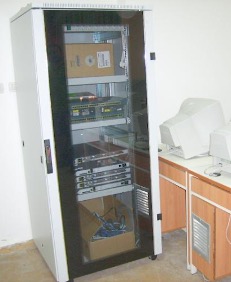
Computer Networks and Sensor Laboratory
Location: Faculty of Engineering and Natural Sciences Classrooms, 2nd Floor
Room: M2-3
Usage: Employed for laboratory sessions of compulsort and elective courses within the Computer Engineering and Software Engineering curricula. These courses include:
- Computer Networks
- Computer Networks II
- Wireless Networks
- Sensors and Sensor Networks
Area: 60 m2
Capacity: 24 öğrenci
Equipment:
- 3 x CISCO 2811 Routers
- 3 x CISCO 2801 Routers
- 6 x WIC-2A/S Switches
- 1 x Cabinet
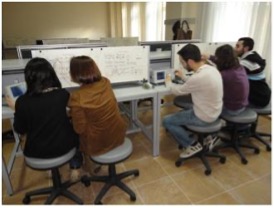
Communication Laboratory
Location: Faculty of Engineering and Natural Sciences Classrooms, 1st Floor
Room: Communication Laboratory
Usage: Utlized for compulsory and elective courses in the Electrical and Electronics Enginering curriculum. These courses include:
- Communication Theory I
- Communication Theory II
- Digital Communication
- Graduation Project
Area: 82 m2
Capacity: 20 öğrenci
Equipment:
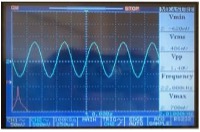
- 15 x GDS-806C Digital Oscilloscope (60MHz)
- 15 x Digital Multimeters
- 15 x Analog ad Digital Modulation Experiment Sets
- 15 x Analog and Digital Demodulation Experiment Sets
Experiments Conducted:
Communication Theory I
- Amplitude Modulation (AM)
- Suppressed-Carrier AM (DSB-SC)
- Single-Sideband Modulation (SSB)
- Frequency Modulation (FM)
- Phase Modulation (PM)
- Demodulation of AM, DSB-SC, SSB, FM, and PM signals
Communication Theory II & Digital Communication
- Pulse Amplitude Modulation (PAM)
- Sampling
- Time-Division Multiplexing (TDM)
- Pulse Position Modulation (PPM)
- Delta Modulation (DM)
- Pulse Code Modulation (PCM)
- Amplitude / Frequency / Phase Shift Keying (ASK / FSK / PSK)
Hydraulics Laboratory
Location: Civil Engineering Laboratory Building
Room: Hydraulics Laboratory
Usage: Applied sessions for the Civil Engineering curriculum, including:
- Fluid Mechanics
- Hydraulics
- Graduation Project
Area: 50 m2
Capacity: 20 students
Equipment:
- 5-m Multi-Purpose Open Channel
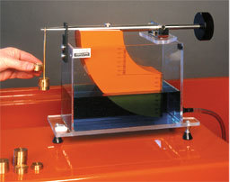
- Bernoulli Experiment Apparatus
- Pipe Energy Loss Measurement Setup
- Local Head Loss Measurement Setup
- Hydraulic Bench
- Reynolds Apparatus
- Hydrostatic Pressure Apparatus
Experiment Scope:
- Open-Channel Experiments
- Demonstration of Bernoulli's Theorem
- Determination of Energy Losses in Pipes
- Determination of Local Head Losses in Pipes
- Reynolds Experiment
- Hydrostatic Pressure Experiment
Business Intelligence Laboratory
Location: Culture Center, 3rd Floor
Rooms: 309, 310, 311, 312
Usage: Applied sessions in the Industrial Engineering curriculum, including:
- Database and Management
- Management Information Systems
- Enterprise Resource Planning
- Business Process Re-engineering
- Engineering Statistics
- Data Analysis in Engineering
- Decision Support Systems
- Special Topics in Industrial Engineering
Area: 4 classrooms x 66 m2
Capacity: 4 classrooms x 25 students
Equipment (per classroom):
- 26 Desktop Computers & Monitors (Intel Core i3/i5, 6–8 GB RAM)
- 2 Switches
- 1 Projektor
- 1 Smart Board
Software:
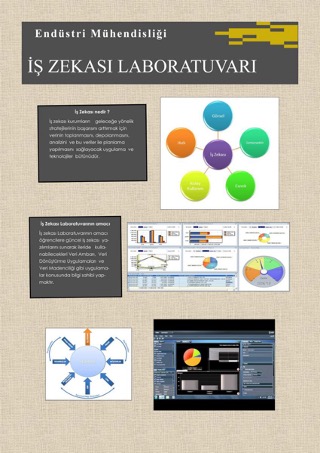
- IBM COGNOS
- IBM BPM
- SAS
Chemistry and Materials Laboratory
Location: Faculty of Engineering and Natural Sciences, Ground Floor
Room: Industrial Engineering Laboratory
Usage: Applied sessions in Industrial Engineering including:
- General Chemistry
- General Chemistry Laboratory
- Materials and Manufacturing Methods
Area: 100 m2
Capacity: 24 students
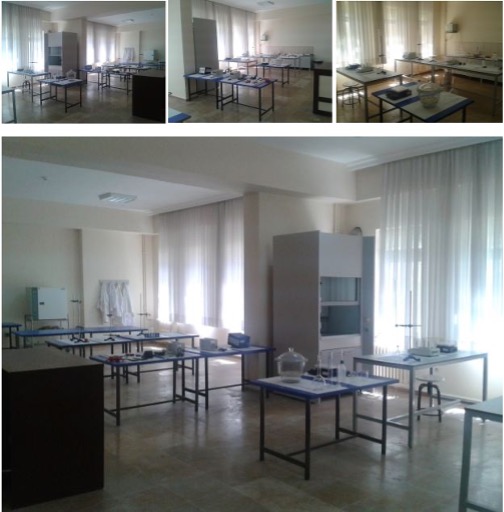
Equipment:
- Sterilizer (Oven)
- Distilled Water Unit
- Magnetic Stirrer with Heater
- Fume Hood
- Precision Balance
- Voltmeter
- Digital Power Supply
- pH Meter
- Centrifuge
- Various Laboratory Chemicals
- Chemical Consumables
Optimization Laboratory
Location: Culture Center, 3rd Floor
Room: 309, 310, 311, 312
Usage: Courses within Industral Engineering, including:
- Operations Research I
- Operations Research II
- Production Planning and Control I
- Production Planning and Control II
- Production Planning Models
- Container Port Optimization
- Stochastic Models
- Supply Chain Optimization
- Reverse Logistics
Area: 4 classrooms x 66 m2
Capacity: 4 classrooms x 25 students
Equipment (per classroom):
- 26 Desktop Computers & Monitors (Intel Core i3/i5, 6–8 GB RAM)
- 2 Switches
- 1 Projektor
- 1 Smart Board
Software:
- CPLEX
- TORA
- LINDO
- LINGO
- GAMS
Digital Electronics and Microprocessors Laboratory
Location: Faculty of Engineering and Natural Sciences Classrooms, 1st Floor
Room: Digital Electronics and Microprocessors Laboratory
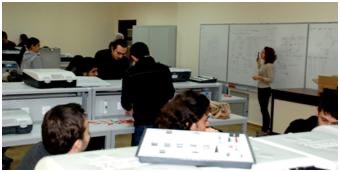
Usage: Practical sessions for Electrical and Electronics Engineering courses:
- Logic Circuits
- Logic Circuit Design
- Microprocessors
- Industrial Electronics
- Graduation Project
Area: 89 m2
Capacity: 20 students
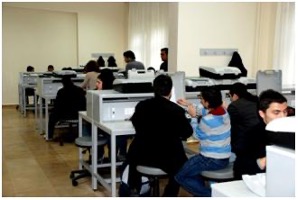
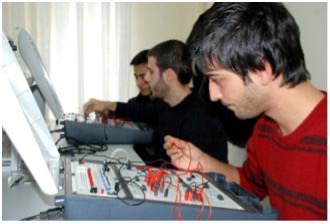
Equipment:
- Logic Circuits Trainer Sets:
- 15 × BL-3000 Main Units
- 15 × Each of BL-3001, BL-3002, BL-3003, BL-3004 Modules
- Industrial Electronics & Microprocessors Trainer Sets and Software:
- 15 × END-7000 Industrial Electronics Training Sets (7 modules)
- 15 × PLC-05 PLC Training Sets (with TD-200 operator panel)
- 1 × Micro C PIC Programming Software
- 15 × Logic Probes
Experiments Conducted:
Logic Circuits:
- Boolean Algebra and Logic Gates; Implementation of Universal NAND/NOR Gates
- Adders, Subtractors, Code Conversion
- Decoders and Encoders
- Multiplexer (MUX) and Demultiplexer (DEMUX)
- Flip-Flop Triggering, Synchronous/Asynchronous Applications
- Registers and Memory Units
Logic Circuit Design (with Verilog HDL):
- Gate-level Modeling of Combinational Circuits
- Data-flow Level Modeling of Combinational Circuits
- Behavioral Modeling of Combinational Circuits
- Decoder/Encoder and MUX/DEMUX Design
- Sequential Circuit Simulation
- Finite State Machine Simulation
- Bus Design
- FPGA-based Designs
- Register-Transfer Level (RTL) Design
- Optimization and Trade-offs
Microprocessors:
- Input/Output Unit Usage
- DAC/ADC with I/O Units
- Port I/O Instructions
- Arithmetic/Logic Instructions
- Bit, Data Transfer, and Branch Instructions
- Timer Application
- Interrupt Application
Industrial Electronics:
- Thyristor Operation under AC Voltage
- Thyristor Turn-Off via Series/Parallel/Capacitive Switch (DC)
- UJT-Triggered Thyristors
- TRIAC Operation under DC/AC
- DIAC Characteristics and Oscillator Use
- TRIAC Triggering with DIAC
- Experiments with Various Sensor Types
Digital Systems Laboratory
Location: Faculty of Engineering and Natural Sciences Classrooms, 2nd Floor
Room: M2-3
Usage: Laboratory sessions for Computer Engineering courses:
- Computer Organization
- Logic Circuit Design
- Programmable Digital Systems
- Programmable Digital Systems Applications
- Microcontrollers
- Embedded Systems
- Computer Architecture
Area: 66 m2
Capacity: 22 students
Equipment:
- Xilinx Spartan-3E Starter Kit FPGA
- Altera DE2 / DE2-115 FPGA Kits
- Altera Cyclone V SoC Kit
- STM32F429DISCOVERY ARM Kits
- Texas Instruments Tiva-C Series Kits
- Texas Instruments CC3000 BoosterPack
- PSoC5 / PSoC3 Development Kits
- PIC Development Kits
- PLC Trainer Sets
- Digital Camera Module
- Touch LCD Module
- 100 MHz Digital Oscilloscope
- Function Generator
- DC Power Supply
- Handheld Multimeter
- Desktop PC & Monitor (Intel Core i3/i5, 6–8 GB RAM)
- Projector
- Smart Board
Simulation Laboratory
Location: Culture Center, 3rd Floor
Rooms: 309, 310, 311, 312
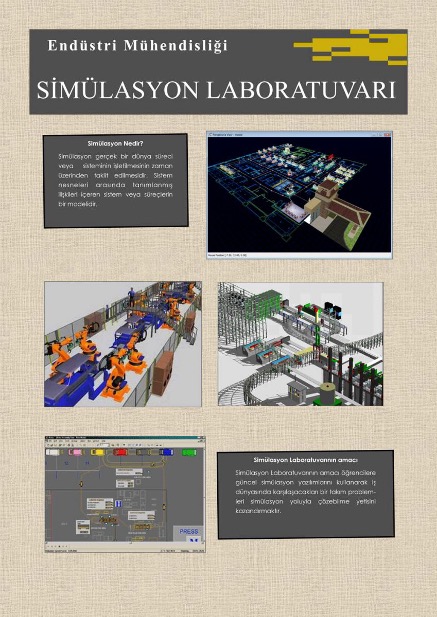
Usage: Industrial Engineering applied courses:
- Simulation
- Sequencing and Scheduling
- Technical Drawing
Area: 4 classrooms x 66 m2
Capacity: 4 classrooms x 25 students
Equipment (per classroom):
- 26 Desktop Computers & Monitors (Intel Core i3/i5, 6–8 GB RAM)
- 2 Switches
- 1 Projector
- 1 Smart Board
Software:
- ARENA
- AutoCAD
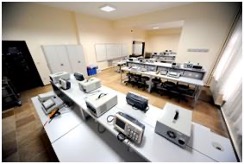
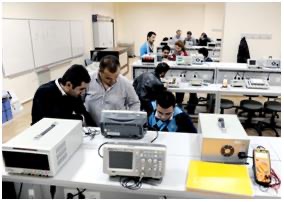
Basic Electricity and Electronics Laboratory
Location: Faculty of Engineering and Natural Sciences Classrooms, 1st Floor
Room: Basic Electricity and Electronics Laboratory
Usage: Practical sessions Electrical and Electronics Engineering courses:
- Circuit Theory
- Circuit Analysis
- Electronic Circuit Elements
- Analog Electronics
- Graduation Project
Area: 89 m2
Capacity: 20 students
Equipment:
- 4 × ATTEN ADS1102 Digital Oscilloscope (100 MHz)
- 15 × ATTEN ADS1022 Digital Oscilloscope (25 MHz)
- 10 × Analog Oscilloscope
- 11 × Adjustable DC Power Supply (10–30 V, 3 A)
- 14 × ATTEN APS-3003S-3D DC Power Supply
- 14 × Signal Generator
- 10 × Analog/Digital Multimeter
- 14 × ATTEN Digital Multimeter
- Basic Electricity and Electronics Training Sets:
- 10 × KL-21001 Main Units
- 10 × KL-13001, KL-13007, KL-13008 Modules
- 10 × KL-80001 Accessory Sets
- 10 × Each of KL-23001, KL-23003, KL-23004, KL-23005, KL-23007, KL-23008, KL-23009, KL-23010, KL-23012, KL-23013, KL-23014, KL-23015 Modules
Experiments Conducted:
Circuit Theory Laboratory:
- DC Current/Voltage and Resistance Measurements
- Ohm’s Law
- Kirchhoff’s Current and Voltage Laws
- Nodal-Voltage Method
- Mesh-Current Method
- Thevenin/Norton, Linearity and Superposition
- Power Measurement and Maximum Power Transfer
- Two-Port Networks
- Amplitude/Frequency/Phase Measurements with Oscilloscope
- RC Circuit Applications
Circuit Analysis Laboratory:
- AC Voltage Measurement
- AC RC and RL Circuits
- Transformer Application
- Series Resonance Circuit
- Passive Low-Pass and High-Pass Filters
Electronic Circuit Elements Laboratory:
- Resistor Codes; Current/Voltage Dividers with Multimeter
- Diode Characteristics; Zener Diodes and Applications
- Diode Rectifier Circuits; Clipper and Clamper Circuits
- BJT Characteristics; Common-Emitter/Collector Characteristics
- BJT Biasing Methods; MOSFET Amplifiers
Analog Electronics Laboratory:
- Frequency Response of Transistor Amplifiers
- Current Sources and Differential Amplifiers
- Feedback Amplifiers
- Operational Amplifier Applications
- Transistor Output Stages
- Power Amplifiers
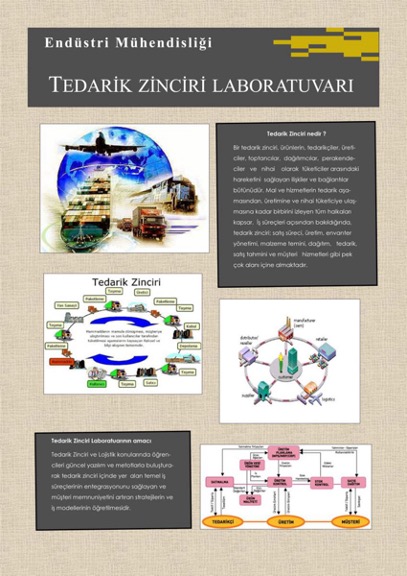
Supply Chain Management Laboratory
Location: Culture Center, 3rd Floor
Rooms: 309, 310, 311, 312
Usage: Industrial Engineering courses:
- Management Information Systems
- Enterprise Resource Planning
- Logistics and Supply Chain Management
- Supply Chain Optimization
- Reverse Logistics
Area: 4 classrooms x 66 m2
Capacity: 4 classrooms x 25 students
Equipment (per classroom):
- 26 Desktop Computers & Monitors (Intel Core i3/i5, 6–8 GB RAM)
- 2 Switches
- 1 Projektor
- 1 Smart Board
Software:
- IFS
- InforERP
- Workcube
Construction Materials Laboratory
Location: Civil Engineering Laboratory Building
Room: Construction Materials Laboratory
Usage: Civil Engineering courses:
- Materials Science
- Construction Materials
- Advanced Concrete Technology
- Graduation Project
Area:150 m2
Capacity: 25 students
Equipment:
- 20- and 2-ton Flexural Testing (Close-Loop)
- 200-ton Compression Testing Machine (Close-Loop)
- 60-ton Tensile Testing Machine
- Aggregate Sieve Sets
- Concrete Mixer
- Cement Mixer
- Oven
- Los Angeles Abrasion Machine
- Rebar Locator (Profometer)
- Schmidt Concrete Test Hammer (×2)
Scope of Services/Experiments:
- Tests are performed in our licensed laboratory in accordance with national and international standards by specialized and experienced personnel, within the scope of university–industry collaboration.
- In existing structures, concrete and rebar detection and the preparation of the Technical Report for Moderate-Level Material Properties in Reinforced Concrete Buildings under the 2007 Earthquake Code, Article 7.2.5 are also carried out.
Software Development Laboratory
Location: Culture Center, 3rd Floor
Room: 309, 310, 311, 312
Usage: Applied sessions for Computer Engineering and Software Engineering courses, including:
- Algorithms and Programming I, II
- Data Structures
- Object-Oriented Programming
- Database Management Systems
- Operating Systems
- Software Engineering
- Computer Networks
- System Programming I, II
- Image Processing
- Parallel and Distributed Systems
- Visual Programming
- Software Construction
- Software Verification and Testing
- Software Project Management
- Mobile Application Development
- Web Application Development
- Java-Based Application Development
- Game Programming
- Parallel Programming
- Data Mining
Area: 4 classrooms x 66 m2
Capacity: 4 classrooms x 25 students
Equipment (per classroom):
- 26 Desktop Computers & Monitors (Intel Core i3/i5, 6–8 GB RAM)
- 2 Switches
- 1 Projector
- 1 Smart Board
Soil Mechanics Laboratory
Location: Civil Engineering Laboratory Building
Room: Soil Mechanics Laboratory
Usage: Civil Engineering courses:
- Soil Mechanics
- Foundation Engineering
- Graduation Project
Area:100 m2
Capacity: 25 students
Equipment:
- Direct Shear (Shear Box) Apparatus
- Fully Automatic Triaxial Test System
- Falling-Head Permeability System
- Triaxial Test System
- Consolidation Apparatus
- Standard & Modified Proctor Mold and Rammer
- Fully Automatic Direct Shear System
- Oven
Experiment Scope List:
- Grain-Size Distribution (Hydrometer)
- CBR Test (Prepared Soils)
- CBR Test (Soaked CBR Percentage)
- Direct Shear (Undrained, Unconsolidated)
- Particle Unit Weight
- Relative Density (Dr)
- Rowe Cell
- Natural Water Content (wn)
- Natural Unit Weight
- Consolidation (Standard Loading–Unloading)
- Liquid and Plastic Limits (wl, wp)
- Sieve Analysis (Granulometry)
- Permeability (Falling-Head)
- Compaction (Modified Proctor)
- Plate Load Test (Field)
- Triaxial Compression (Stress-Controlled), UU
- Shrinkage Limit (ws)
- Permeability (Constant-Head)
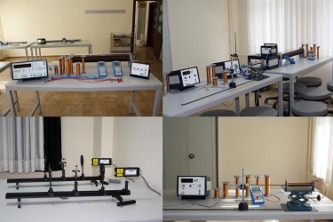
Physics Laboratory
Usage and Capacity:
- Supports compulsory courses PHYSICS-II / FİZİK-II offered across all engineering programs.
- Contains 9 experiment types and 16 experiment sets.
- With 2 students per set, the total capacity is 32 students.